
What Kind Of Change Do I Want?
Working alongside colleagues brings many challenges, whether in an office or hybrid environment. So many factors affect how we feel and how we behave. The company culture for example: ‘how we do things round here’; a supportive or challenging boss; a mentoring buddy; an annoying teammate; easy objectives or complicated projects to complete. The list goes on.
If we’re lucky, we feel we’re in the right role in the right place and its mainly plain sailing. When it's like that we find it easy to build rapport and any changes we make will feel natural and are probably easily agreed.
But when there’s a difference in how we want to work and our colleagues want us to work, or when we’re dealing with a company reorganisation, it can lead to disagreement, feelings of disappointment, lack of self-worth, resistance or even conflict. Then we either seek to change our own behaviour or persuade others to change. Either way it's not going to be easy and that's where a coach can help.
Because change happens over time. Something that is easy to forget when we’ve spent months planning a restructure, or we’re feeling cross and frustrated with ourselves or someone else. By then we either want the problem to go away or we want the change now!
You have come to coaching because you have a desired outcome. Desired outcomes describe how you would like the world to be, or how you would like to be in the world.
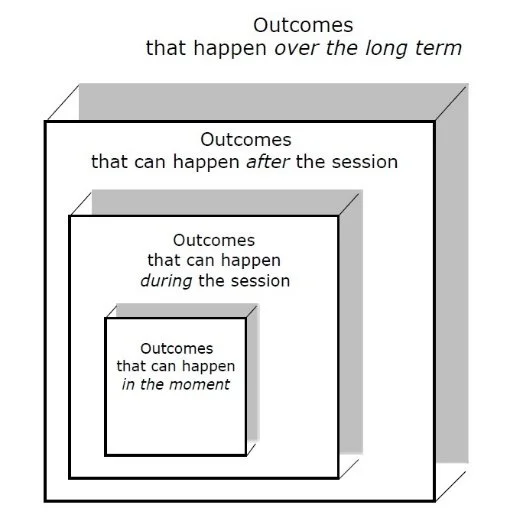
But while you're thinking about whether you want this change by tomorrow, next week, within the next three months or over the next year, as your coach I may be contemplating some different timeframes. Such as what needs to happen within the session for you to achieve the longer term outcome you want after the session; and to notice what might be changing in the moment as we work together.
This Three-Box Model, developed by Penny Tompkins and James Lawley, is a way to track shifts in a desired outcome in relation to the time frame when the outcome can happen. You can read the full article here.
When we’re seeking change or actively planning for change, it is easy to underestimate the importance of time as a factor. For example, senior managers often spend months planning a company restructure. Then when they announce it to staff, expect implementation to happen within weeks. This can lead to a lot of resistance and lack of trust. People need time to absorb information and transition from old to new ways of working.
And as an individual, we may not realise how ingrained our behavioural habits are. But unless we learn to recognise what thoughts or feelings are influencing those habits, we won’t locate the key issue to address in order to achieve the change we want.
So if you’re considering honing your skills to get your desired outcome, you might want to start by think about time. How long will this change take? How much time can I invest in my progress? By when do I need this to happen?
Ready for a change?
Framework for Change © Penny Tompkins and James Lawley – used with permission